
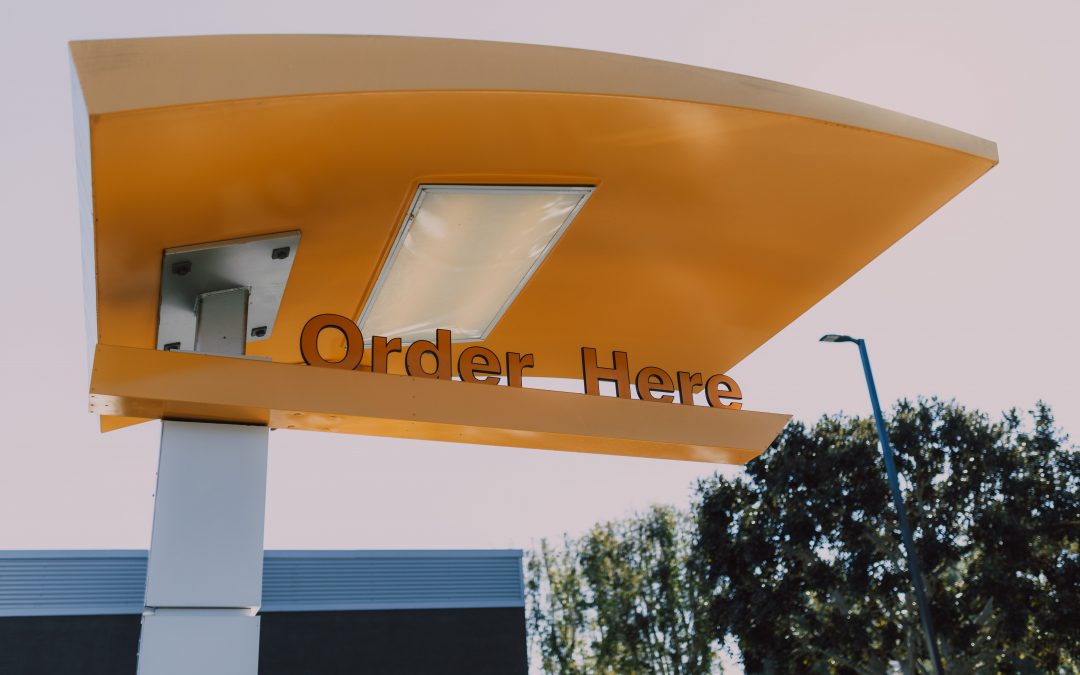
Balancing traffic flow, community aesthetics, and profitability in an era when the drive-thru is more valuable and more contentious than ever. Drive-thrus are having a moment. What was once a convenience feature has become the single most sought-after amenity in quick-service restaurant real estate, accounting for most of the sales volume for major chains. But as demand surges, so does scrutiny from city planners, neighborhood associations, and an increasingly design-conscious public. For developers and landlords, threading that needle is less an art than an engineering challenge with aesthetic consequences.
• 70%+ of QSR revenue is driven by drive-thru lanes
• 120 ft minimum stacking length, now required by many municipalities
• 3-6 months is the typical approval delay for drive-thru variance requests
At LRE & Co, we’ve navigated this tension across dozens of projects, from suburban pad sites to urban mixed-use redevelopments. The challenge is the same whether you’re in a Texas growth corridor or a legacy strip-center retrofit: how do you design a drive-thru that works operationally, clears the municipal hurdle, and doesn’t alienate neighbors?
The municipal maze
Zoning requirements for drive-thru lanes have become considerably more prescriptive in recent years. Gone are the days of a simple curb cut and a menu board. Today’s approvals often hinge on stacking depth (the number of vehicles a lane can hold before spilling onto adjacent roadways), turning radii, pedestrian conflict points, noise buffering, and even speaker decibel limits.
In fast-growing submarkets, we’ve encountered municipalities that require traffic impact analyses for any new drive-thru construction, even for pad sites on existing retail corridors. One recent project required a full signal timing study before the city would greenlight a dual-lane coffee concept, adding nearly four months to the permitting timeline.
“The best drive-thru designs aren’t built around the car. They’re built around the site, and then the car finds its way.”
The takeaway: engaging municipal planners early, not at submission, is now standard practice on every project we take to entitlement. The cities that seem most resistant to drive-thrus are often the ones where a developer once miscalculated stacking, resulting in a traffic incident that made local news. Institutional memory in planning departments is long.
Aesthetics as a negotiating tool
Here’s what experienced developers know that first-timers often overlook: design quality is leverage. Cities and HOA-governed commercial corridors are far more likely to approve a drive-thru with enhanced landscaping buffers, architectural screening walls, and pedestrian-friendly site circulation than one that reads as purely utilitarian.
Profitability lives in the details.
Drive-thru revenue is sensitive to throughput, and throughput is sensitive to design. The difference between a well-sequenced dual-lane with bypass capacity and a single-lane bottleneck can represent millions of dollars in annual sales, which translates directly into rent basis and lease value for the landlord.
We’ve found that the most financially successful drive-thru configurations share a few common traits: dedicated bypass lanes for mobile orders (now essential for any QSR aiming to achieve meaningful digital volume), sufficient stacking to prevent spillback during peak morning dayparts, and clear wayfinding that reduces hesitation time at order points. Each of these may seem like an operational detail, but each is a design decision made at the site plan stage.
What’s next
The drive-thru is not going anywhere; if anything, the post-pandemic normalization of drive-thru and mobile pickup has made it the default format for new QSR development. What is changing is the bar for approval and the level of design sophistication required to meet it. Municipalities are getting smarter about traffic modeling. Communities are getting more vocal about visual standards. And tenants are getting more specific about lane geometry and technology integration.
For LRE & Co, the drive-thru dilemma is ultimately a design problem disguised as a political one. Solve the design, circulation, aesthetics, stacking, and pedestrian interface, and the politics tend to follow. The projects that stall are almost always the ones that treated design as an afterthought, something to finesse after the deal was done. The ones that close and perform are the ones where the drive-thru lane was the first conversation, not the last.