
The Anchor Has Changed
For three decades, Nevada’s neighborhood retail centers operated on a simple principle: anchor with a grocery store or large retailer, surround it with service and specialty shops, and rely on the anchor’s traffic to benefit the whole center. That approach still holds; grocery-anchored centers remain among the most stable retail investments in any market. However, a significant shift has occurred in how the top-performing Nevada centers are being assembled.
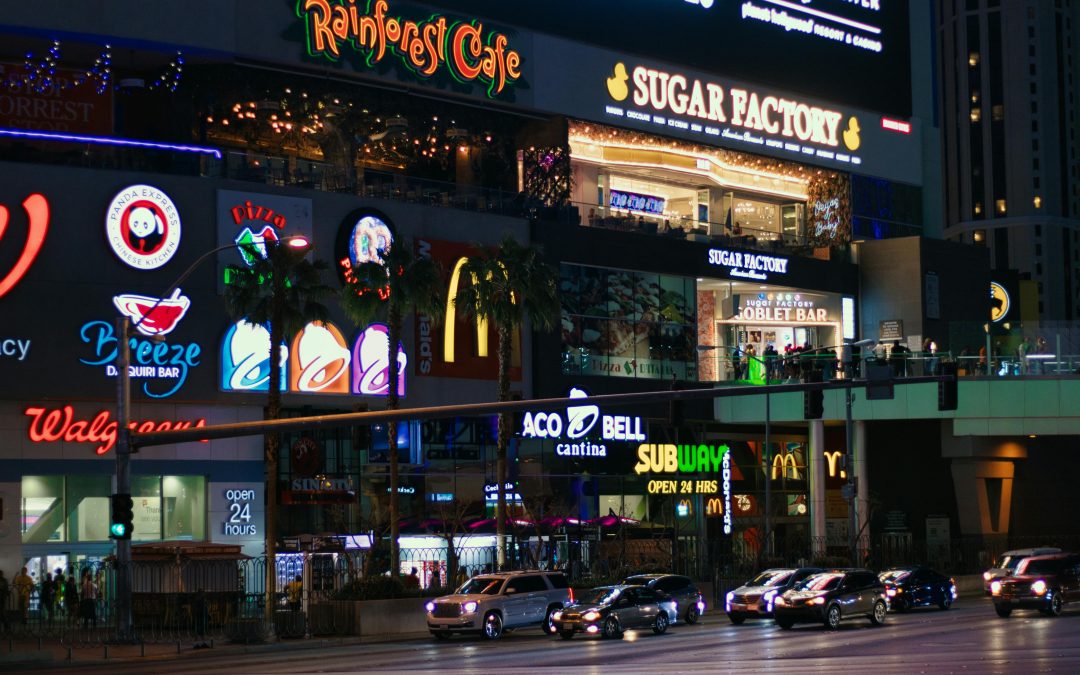
Fast-casual food service has become one of the most reliable traffic drivers in modern retail. Often, a well-placed group of fast-casual concepts attracts more consistent daily visitors than a traditional anchor, and it does so across more dayparts and more days of the week, with a stronger emotional tie to customers.
The Traffic Mathematics of Fast Casual
Compare the traffic patterns of a quality fast-casual restaurant with those of a typical in-line retail tenant. The fast-casual concept operates seven days a week across breakfast, lunch, and dinner periods, with peak times generating significant foot traffic multiple times each day. In contrast, a typical specialty retailer operates mainly during business hours, with more focus on weekends, and has much less frequent customer visits.
When you multiply that difference across a center with three or four quality fast-casual tenants, a breakfast-focused concept, a lunch-driven fast-casual, a drive-thru QSR, and a coffee anchor, you create a traffic driver that benefits every other tenant in the center. The pharmacist, the nail salon, and the urgent care clinic all perform better when the center generates consistent, multi-purpose visits.
Nevada’s suburban retail centers are increasingly planned with this approach from the start, rather than as an afterthought to the anchor leasing strategy.
Brands Leading the Nevada Fast-Casual Expansion
The fast-casual brands expanding into Nevada’s suburban markets span the entire spectrum of the category: well-known national chains that have historically served Nevada markets outside the Strip, regional operators who grew their businesses in California and are now expanding across state lines, and emerging brands in the better-burger, Mediterranean, and upscale Mexican categories that find Nevada’s demographics highly receptive.
For developers and landlords, the practical implication is that the tenant pipeline for quality fast-casual concepts in Nevada’s growth corridors is deeper than ever. Competing for the best concepts requires acting quickly, offering the right physical formats, especially drive-thru access, which has become almost a necessity for most fast-casual operators, and demonstrating market knowledge that instills confidence in tenants about the location.
The Investment Case for Brokers and Their Clients
Fast-casual-anchored retail centers in Nevada attract strong investor interest from both local and out-of-state buyers. The credit quality of national fast-casual tenants, together with Nevada’s favorable tax climate and population growth, creates an asset profile that compares favorably with similar properties in more expensive California markets.
Brokers who understand tenant mix dynamics and can explain why a specific combination of fast-casual concepts will outperform an alternative mix are well positioned to deliver real advisory value. This expertise distinguishes transaction brokers from trusted advisors and fosters the long-term client relationships that lead to repeat business.
Ready to explore commercial real estate opportunities in Nevada? Contact LRE & Co at lrecompanies.com