
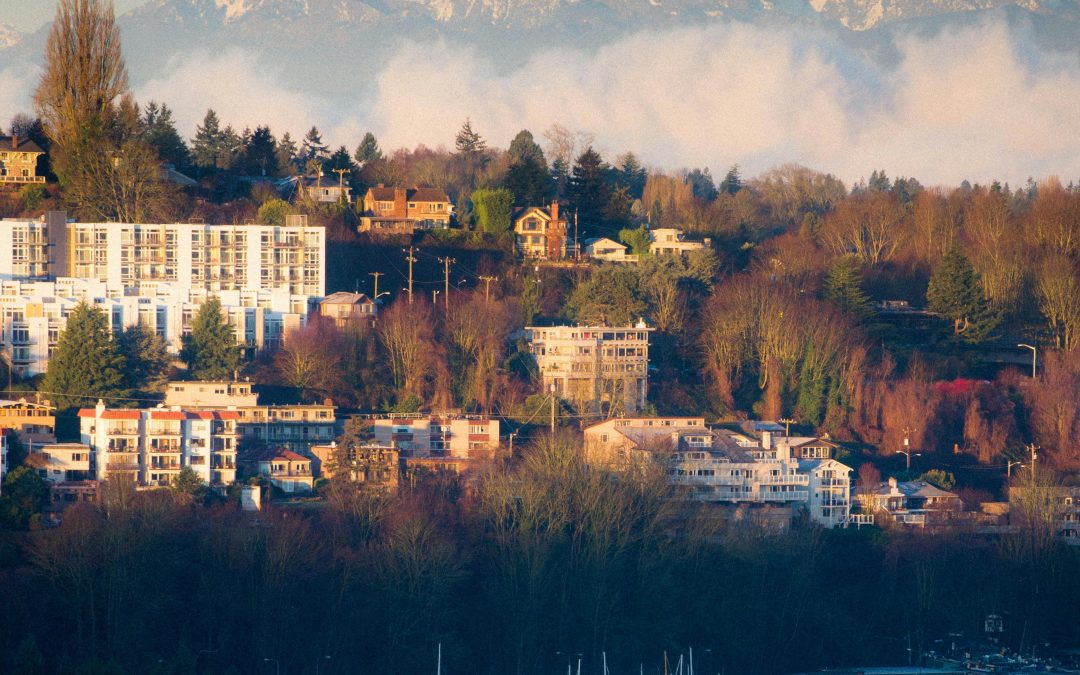
The Pacific Northwest is facing a housing crisis that threatens the very fabric of our communities. From Seattle to Portland to Vancouver, BC, home prices and rents have skyrocketed far beyond what most working families can afford. As a commercial real estate developer who has spent decades building projects throughout this region, I’ve witnessed this crisis unfold firsthand. The solution isn’t simply to build more apartments or single-family homes; it’s to fundamentally rethink how we develop our cities through smarter, mixed-use development.
The Crisis in Numbers
The statistics are sobering. In Seattle, median home prices have more than doubled over the past decade, while median household incomes have increased by less than half that amount. Portland tells a similar story, with renters now spending more than 30% of their income on housing, the threshold at which housing is considered unaffordable. Vancouver, BC, consistently ranks among the world’s least affordable cities. This isn’t sustainable and is pricing out teachers, nurses, service workers, and young professionals who make our cities function.
Mixed-Use: More Than Just Buildings
Mixed-use development offers a comprehensive solution by addressing multiple challenges at once. These projects combine residential units, retail spaces, offices, and community amenities in walkable neighborhoods where people can live, work, and play without being fully car-dependent. This isn’t theoretical; we’ve seen it work beautifully right here in the Pacific Northwest.
Portland’s Pearl District stands as a testament to transformative mixed-use development. What was once an area of abandoned warehouses and light industrial buildings is now one of the city’s most vibrant neighborhoods. Residents can walk to grocery stores, restaurants, parks, and their workplaces. Street-level retail creates street-level visibility and a sense of community that purely residential developments often lack.
Similarly, Seattle’s Capitol Hill neighborhood shows how thoughtful density can preserve neighborhood character while adding desperately needed housing. New mixed-use buildings include affordable units alongside market-rate apartments, with ground-floor spaces that serve local residents rather than catering solely to the highest-paying national chains.
Navigating the Regulatory Landscape
As developers, we must recognize that successful mixed-use projects require navigating complex regulatory frameworks. Washington’s Growth Management Act and Oregon’s urban growth boundaries were designed to prevent sprawl and protect natural areas, goals I wholeheartedly support. However, these policies also concentrate development pressure within urban areas, making every project both more challenging and more important.
The key is to work collaboratively with communities rather than against them. At LRE & Companies, we’ve learned that the best projects emerge from genuine dialogue with neighborhood stakeholders. This means treating affordable units not as an afterthought but as a fundamental component. It means creating genuinely public spaces that serve the entire community, not just the development’s residents. And it means ensuring that ground-floor retail addresses local needs, such as a neighborhood coffee shop, a corner market, and a pharmacy, rather than just pursuing the highest rents.
Policy Shifts Creating Opportunities
There’s encouraging news on the policy front. Seattle recently updated its design review process to expedite approval of well-designed mixed-use projects. This recognizes that while community input is essential, the housing crisis requires us to move faster than traditional processes allow. The new system rewards developers who incorporate affordable housing, sustainable design, and quality public spaces.
Portland’s Residential Infill Project marks another breakthrough, allowing duplexes, triplexes, and small apartment buildings in areas previously restricted to single-family homes. This “missing middle” housing is crucial for creating affordable options while preserving neighborhood scale and character.
These policy shifts create real opportunities for developers willing to think beyond traditional models. The cities are essentially saying: bring us creative, community-focused projects that address the housing crisis, and we’ll work with you to make them happen.
Environmental Imperatives
The environmental case for mixed-use development aligns perfectly with Pacific Northwest values. When people can walk or bike to meet daily needs, car dependence decreases, lowering carbon emissions and traffic congestion. Building up rather than out preserves the forests, farmland, and natural areas that define our region’s character and support our quality of life.
Mixed-use developments also enable sustainable design features: shared renewable energy systems, efficient district heating and cooling, stormwater management through green infrastructure, and reduced per-unit resource consumption through shared amenities. These aren’t just environmental benefits—they also reduce operating costs and create long-term value.
Building the Future
The Pacific Northwest’s housing crisis won’t be solved overnight, and no single approach will do the job. But mixed-use development is our best path forward. It adds housing supply where people want to live and work. It builds complete, walkable neighborhoods that support local businesses and community connections. It aligns with environmental values while making economic sense.
As developers, we have both an opportunity and a responsibility. Cities are ready for change. Policies are evolving to support smart growth. Communities are desperate for solutions. Now we need to deliver projects that don’t just add housing units but also create the kinds of neighborhoods where people want to build their lives.
The question isn’t whether we can afford to embrace mixed-use development, it’s whether we can afford not to. Our region’s future depends on getting this right.