
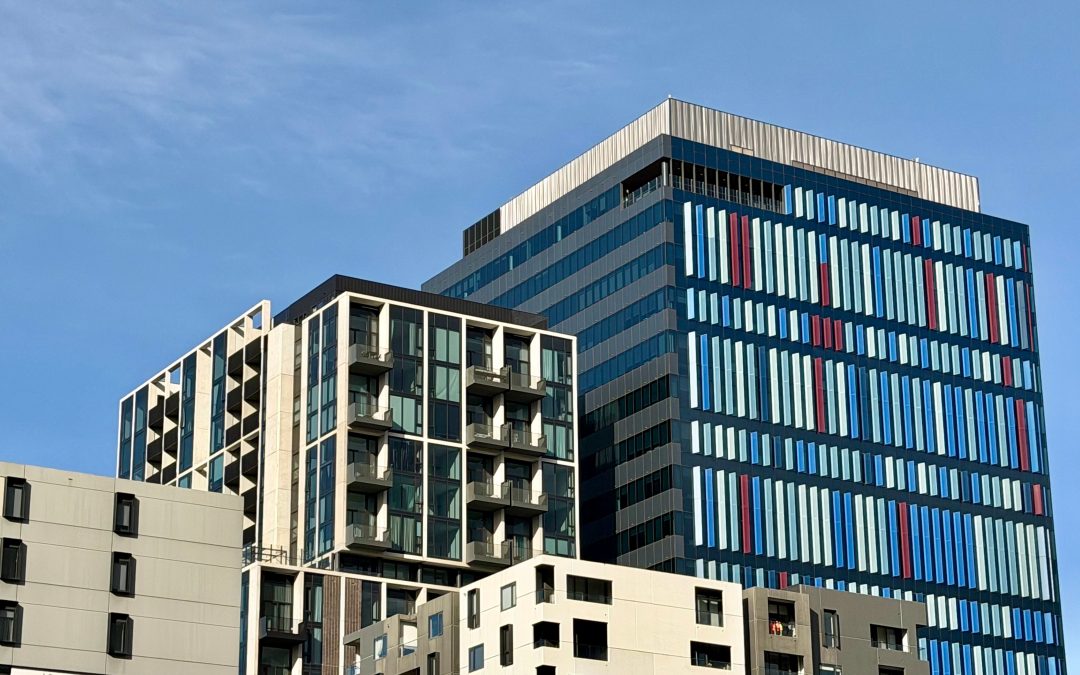
A few years ago, if you’d told me that the hottest asset class in commercial real estate would be one that refuses to be just one asset class, I might have laughed. But that’s exactly where we are. Mixed-use development, projects that stitch together housing, retail, office, and hospitality into a single walkable footprint, has moved from niche to mainstream, and I don’t think it’s a passing trend. I think it’s a rewrite of how we build cities.
Why Mixed-Use, Why Now
Every developer I know is chasing the same thing: convenience. Renters and shoppers alike want to live somewhere they don’t have to get in a car to grab coffee, pick up groceries, or drop off dry cleaning. According to the 2026 Emerging Trends in Real Estate report from PwC and the Urban Land Institute, mixed-use developments continue to gain prominence as the entire commercial real estate industry reshapes itself around convenience-first thinking. That’s not a small signal. When the industry’s most closely watched annual survey points to a category, capital tends to follow.
I’ve also watched the affordability conversation shift the calculus. Renters today are telling us, through their leasing decisions and surveys, what they value. Roughly 40% of renters rank affordability and easily accessible amenities as very important, and about 20% now say energy-efficient features factor into where they choose to live. Mixed-use projects, by design, deliver on both: shared infrastructure lowers costs, and integrated amenities mean fewer trips, less driving, and a smaller footprint.
The Demographics Behind the Demand
Two demographic waves are driving this forward at the same time, and I think most people only see one of them.
The first is aging in place, just not in the house where they raised their kids. With the first baby boomers turning 80 in 2026, we’re approaching what the Emerging Trends report calls a historic inflection point in senior housing demand. Empty nesters are trading large single-family homes for condominiums and apartments in mixed-use developments, precisely because those developments bundle the healthcare access, dining, and social opportunities that matter most at that stage of life.
The second wave is the hybrid workforce. Full-time remote work has cooled since the pandemic peak, but hybrid schedules are here to stay, reshaping what people want from a neighborhood. Workers with flexible schedules are gravitating toward mixed-use environments where they can work from a home office one day and post up at a co-working space or a coffee shop with reliable WiFi the next. That’s not a perk anymore. For a lot of renters, it’s table stakes.
Where the Capital Is Going
If you want to know where developers believe the next cycle will play out, look at where they’re putting their money to work. The Emerging Trends in Real Estate 2026 study names the Dallas-Fort Worth area as a particularly strong candidate for mixed-use construction and acquisition, alongside Houston, Jersey City, Miami, and Brooklyn. That’s a mix of high-growth Sun Belt metros and dense, land-constrained coastal markets, which tells me developers aren’t chasing a single playbook. They’re applying the mixed-use model wherever density, population growth, or both make single-use development inefficient.
It’s worth noting this isn’t only a U.S. story. In the UK, at least 25% of residential developments are now expected to be part of mixed-use schemes, backed by policy shifts such as the Homes England 2023 to 2028 strategy, which favors brownfield regeneration that delivers homes, jobs, and commercial activity on the same site. When two very different regulatory and capital environments converge on the same model, that’s a strong signal we’re looking at a structural shift, not a regional fad.
The Part Nobody Puts in the Investor Deck
Here’s what I tell younger developers who ask me about getting into mixed-use: it’s harder than it looks, and anyone who says otherwise hasn’t managed one. You’re juggling residential, retail, and office leases under one roof, each with different terms, regulatory requirements, and revenue timelines. Fire compartmentation and acoustic separation between a restaurant and the apartments above it aren’t paperwork exercises; they’re design decisions that show up in your construction budget on day one. Layer in evolving building code requirements, such as the dual-staircase requirements now being phased in for taller residential buildings, and you start to understand why mixed-use deals take longer to underwrite and build than a single-use project of the same size.
But that complexity is also the moat. Every operator I compete with can build a strip center or a garden-style apartment complex. Fewer can execute a mixed-use project well, and that scarcity is exactly why the developments that get it right command a premium in leasing and resale.
What This Means for the Next Decade of Cities
I think we’re watching the return of an old idea in new clothes. Ancient and pre-industrial cities were mixed-use by default; people lived above the shop, walked to the market, and worked where they lived. Twentieth-century zoning pulled all of that apart into separate residential, commercial, and industrial zones, and we spent decades commuting as a result. Now density, cost pressures, demographic change, and a genuine appetite for walkability are pulling those pieces back together, this time with better materials, smarter code compliance, and vertical construction that lets us do it at real scale in the middle of a dense downtown.
For developers, that means treating mixed-use not as an amenity to bolt onto a project but as the organizing principle behind it. The sites that will perform over the next cycle aren’t the ones with the flashiest retail signage. They’re the ones where the residential, retail, and workspace components were designed to depend on one another. That’s the discipline this next decade of city-building will demand, and it’s the one I’m building toward.